Car loans help individuals purchase a vehicle without paying the full price upfront. However, when applying for a car loan, borrowers often face a common question: should they choose a new car loan or a used car loan? Both options have their own advantages and limitations depending on budget, interest rates, and financial goals.
A new car loan is a type of vehicle loan provided by banks or NBFCs to finance the purchase of a brand-new car from a dealer. These loans often come with competitive interest rates and longer repayment tenures.
A used car loan helps borrowers purchase a pre-owned or second-hand car. Lenders provide financing based on the car’s age, condition, and market value.
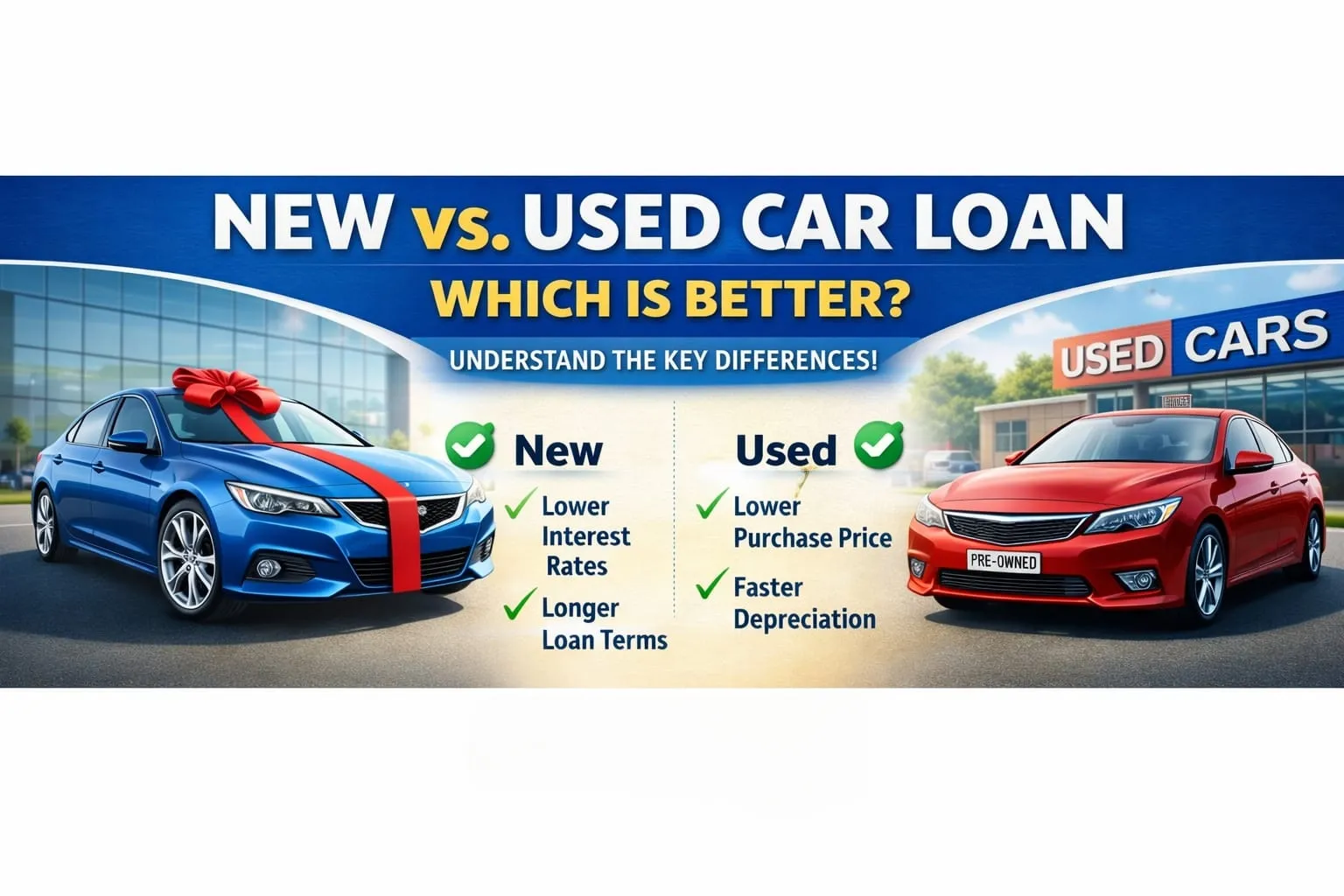
New car loans usually have lower interest rates because new vehicles have higher resale value and lower risk for lenders. Used car loans often come with slightly higher interest rates.
For new cars, lenders may finance up to 90%–100% of the vehicle’s value. In contrast, used car loans typically finance a lower percentage of the car’s value.
New car loans often offer longer repayment periods, sometimes up to 7 years. Used car loans generally have shorter repayment tenures depending on the vehicle’s age.
New cars depreciate faster during the first few years of ownership. Used cars usually have slower depreciation since a large portion of the value has already decreased.
The documentation process for both loans is quite similar and usually includes identity proof, address proof, income proof, and bank statements. However, lenders may also check the condition and age of the used vehicle.
New cars typically require less maintenance and may come with manufacturer warranties. Used cars may have higher maintenance costs depending on their condition and usage.
New car loans are often processed faster because the vehicle value is fixed by the dealer. Used car loans may take slightly longer as lenders evaluate the vehicle’s condition and market value.
If you want lower interest rates, longer loan tenure, and a brand-new vehicle, a new car loan may be the better choice. However, if you are looking for a more affordable vehicle with a lower purchase price, a used car loan may suit your budget.
Both new and used car loans offer different benefits depending on your financial situation and preferences. Carefully compare interest rates, loan terms, and overall costs before making a decision to ensure you choose the option that best fits your needs.